A room built once, shot from anywhere
Interior photography costs what it costs because of the set: a location, a stylist, props, daylight that changes hourly, and a crew rebuilding the room between shots. A CG interior is built once and then costs almost nothing to change — different time of day, different dressing, different camera position, all without anyone returning to a location.
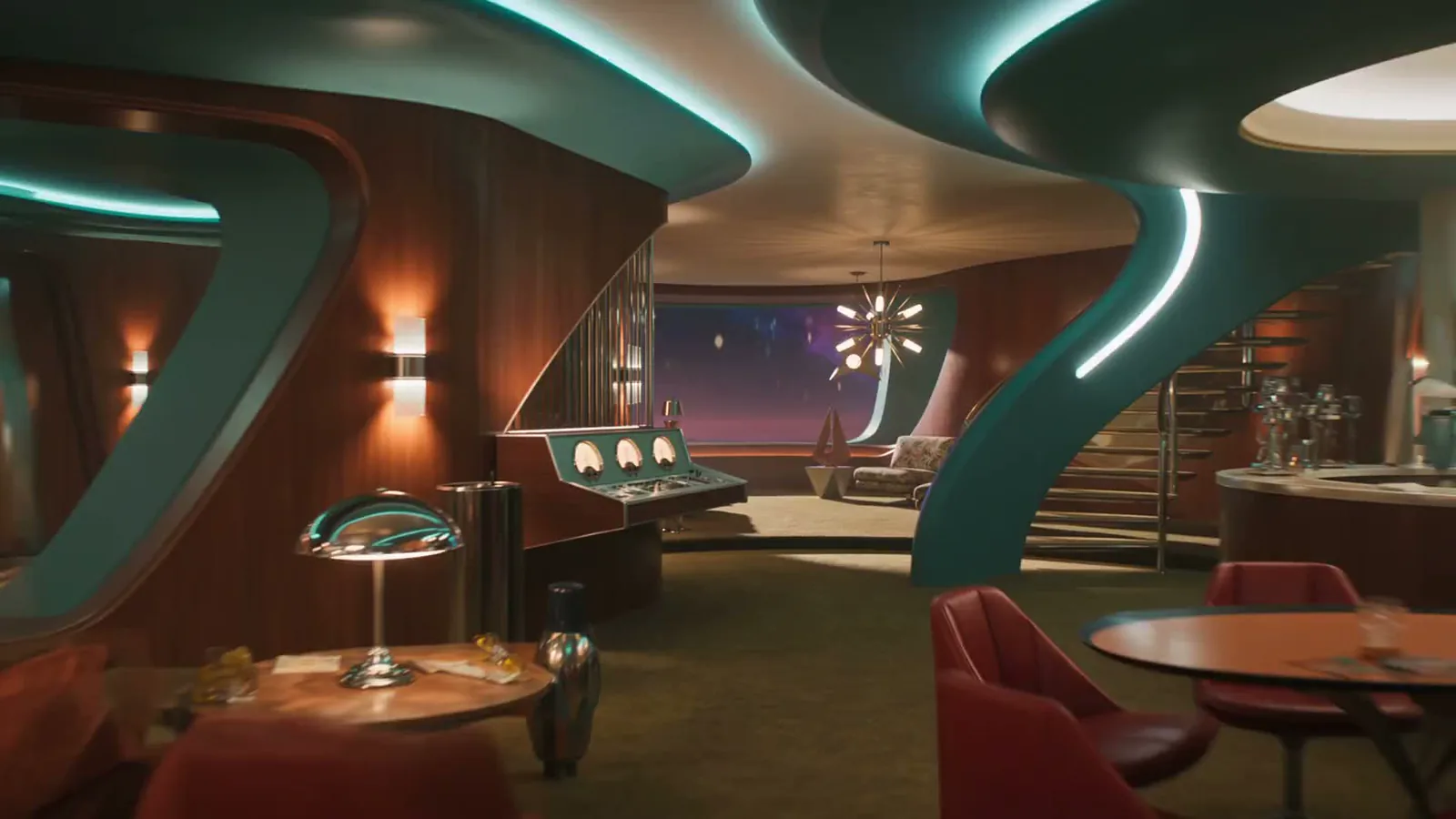
- Discipline
- Environment design and lighting
- Built
- Fully CG — architecture, furniture, props and lighting
- Materials
- Curved timber veneer, emissive coving, woven textiles, chrome
- Outputs
- Multiple camera angles and lighting states from one build
What makes an interior read as real
Not the furniture. It is the light doing several jobs at once — a practical lamp throwing a warm pool, neon coving washing a ceiling that then bounces onto the floor, a window contributing a completely different colour temperature from outside, and every one of those surfaces feeding light back into the others. Interiors are dominated by indirect light, which is why a room lit with a single source always looks like a product shot of a room rather than a room.
Curved timber is the hard surface here
The walls in this build are veneered and curved, and veneer grain follows the sheet it was cut from rather than the shape it was bent around. Tiling a wood texture across a curve produces grain that runs in impossible directions — subtle enough that most people would not name it, obvious enough that the room stops reading as built. The grain had to be laid out per surface, the same way a joiner would think about it.
The angles a camera could not physically take
- Cameras placed inside walls, or where a tripod could not stand
- The same room at morning, dusk and lamp-lit — lighting states, not four shoots
- Props and dressing swapped for a different season without rebuilding the set
- Lens choices that would need a room twice the size to achieve physically
Why this matters for furniture and interiors brands
A furniture range is sold as combinations: one frame, twenty fabrics, four timbers. Photographing that matrix is impossible, and rendering it is a material swap against a room that already exists. The set is the expensive part and it is paid once — which inverts the economics of catalogue photography almost completely.