A character built to be shot, not just modelled
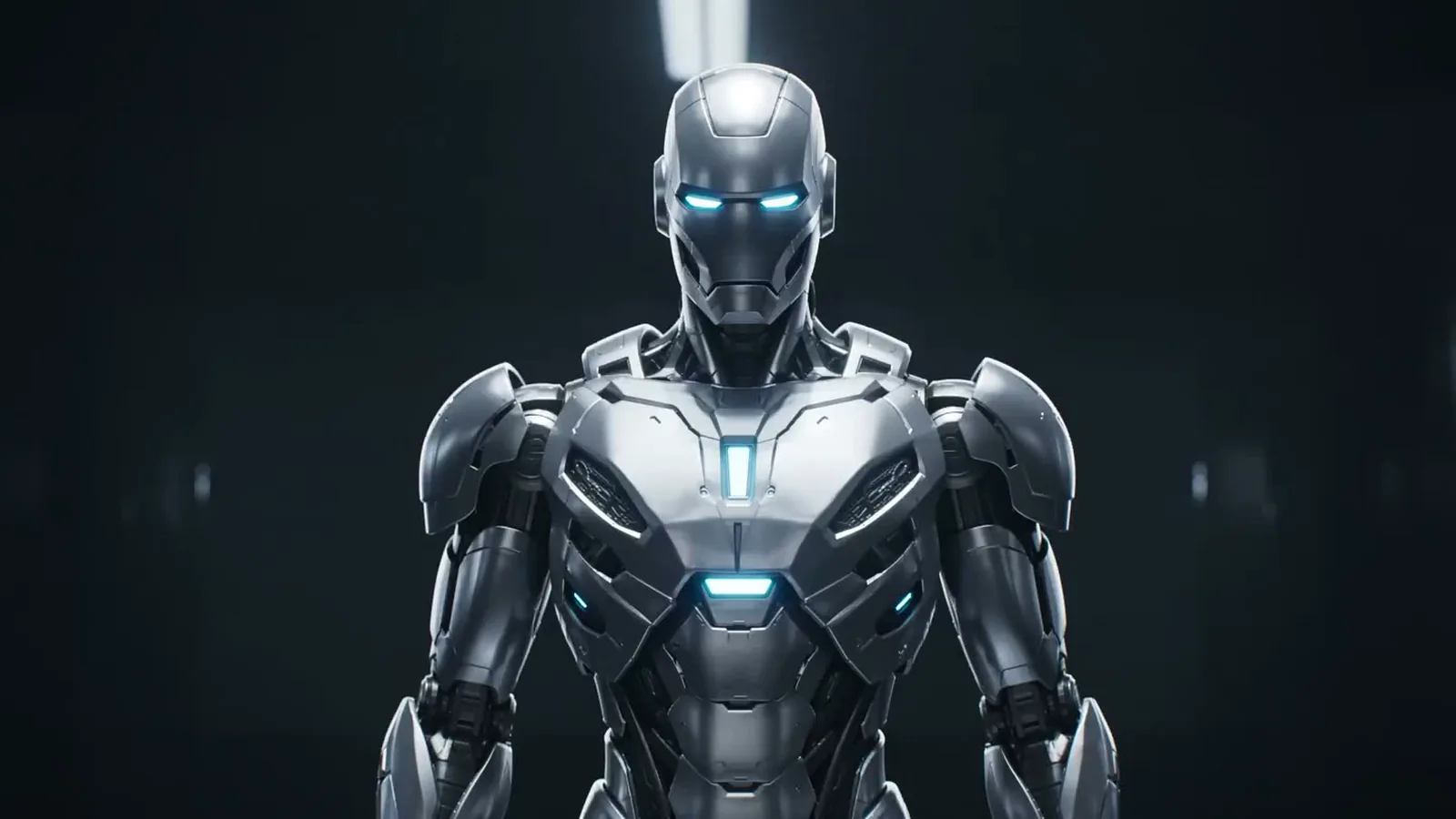
Some brand films need a face rather than a product. This is a hard-surface character — panelled armour over a rigged figure, with emissive detail — built so it could hold a slow reveal in a dark studio and then survive being cut against a completely different, much brighter environment plate.
- Discipline
- Character modelling, rigging and animation
- Materials
- Brushed and polished metal, emissive panels, matte composite
- Techniques
- Hard-surface panelling, rigging, plate integration
- Outputs
- Studio hero film, environment-integrated shots
Hard-surface panelling has to survive movement
A character made of rigid plates cannot deform like skin. Every joint needs panels that slide, rotate or overlap in a way that stays physically plausible through the full range of the rig — and the places that fail are always shoulders and hips, where a real armoured figure would have the most engineering. Model it in a static A-pose and the first animation test tears it apart. This was built with the movement in mind, then rigged, rather than the other way around.
Emissive detail is a lighting decision
The glowing elements are not just materials — they are practical lights inside the shot. They spill onto the panels around them, throw a cool cast into the chest recesses, and give the figure a shape in a frame that is otherwise almost black. That is what lets the character read at all in a dark studio, and it means the emissive intensity had to be set as part of the lighting rig rather than picked as a colour on a material.
Cutting a studio character into a plate
- Match the plate's key direction and colour temperature, not just its exposure
- Pick up bounce from the environment — foliage throws green into anything standing in it
- Add the atmospheric haze that separates a real subject from its background
- Match the plate camera's lens character: distortion, bloom, grain, depth of field
Why a character rather than a product
A product film sells the object. A character sells an idea about the brand, and it can be reused across campaigns in a way a single product shot cannot — different environments, different actions, different lengths, all from one build. It is a larger up-front investment than a product render and a much longer-lived asset.